The Research Behind Every Successful Launch: A Conversation with Dr. Jennifer Posey
What does it take to bring a new academic program to market with confidence? At Boundless Learning, the answer starts with research.
In this Q&A, Dr. Jennifer Posey shares how market analysis, learner insights, evidence-based decision making, and cross-functional collaboration helped inform Xavier University's launch strategy.
I am a strategic impact analyst on the research and insights (R&I) team. I sit at the intersection of research, strategy, and storytelling, turning data into actionable business cases. My goal is to ensure our program launches are grounded in market realities and centered around learner needs, helping our university partners make evidence-based decisions with confidence — all while supporting stronger student outcomes.
On any given day, I might be analyzing competitive market trends, reviewing partner materials, supporting launch readiness, and translating large volumes of complex information into clear, decision-ready insights. One of my favorite parts of my work is presenting research directly to our partners via video calls or in-person while on campus.
One of the most rewarding parts of my work is guiding partners through launch readiness and market viability discussions. I recently contributed to a strategic program plan with a nursing department at a private university. It allowed me to combine my healthcare background and academic expertise with competitive benchmarking, market demand analysis, and learner insights to build actionable recommendations. The most rewarding part is anticipating risks and answering questions before they are asked, which builds partner confidence and cross-functional alignment.
The Program Readiness Assessment (PRA) is our structured framework for evaluating a program’s potential before launch. The PRA starts with market research that is shared with faculty as part of the process to build programs in partnership that have great potential in the market. It bridges the gap between institutional ambition and market reality by aggregating data on employer trends, competitive saturation, and learner interest. Its true value lies in the discipline it imposes: The PRA forces teams to test assumptions and align on risks early, which is essential in fast-moving launch environments.
I rely on a combination of partner-provided materials, market and industry data, competitive analyses, learner behavior trends, and internal institutional knowledge. We are fortunate that our department leader designed a robust scoring tool (the Opportunity Matrix) and Boundless Learning provides additional research tools for multifaceted data sourcing. No single source tells the full story, so the real value comes from considering unique inputs across various sources.
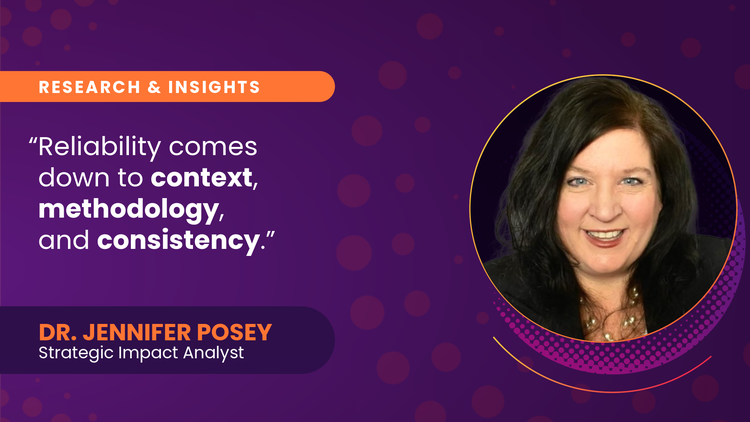
Reliability comes down to context, methodology, and consistency. I look closely at how data was collected, whether findings align across sources, and whether insights hold up against real-world market conditions. I also believe qualitative insights matter just as much as quantitative. Learner feedback, partner conversations, and cross-functional observations often surface nuances that raw data alone cannot capture.
Early in a launch, some of the biggest unknowns include learner demand, competitive differentiation, enrollment behavior, and how quickly a market may shift. There is also often uncertainty around messaging — specifically, what aspects of a program will resonate most strongly with prospective learners.
We close those gaps through iterative research and cross-functional collaboration. That can include market analysis, audience segmentation, competitor reviews, learner insight gathering, pilot messaging tests, and ongoing stakeholder feedback loops. One of the most important things we do is remain adaptable. Launch work is rarely about having perfect certainty; it is about reducing risk through informed decision-making and continuous refinement.
Xavier was a quick-to-market project, which ultimately drove us to use a more abbreviated PRA process. When we looked at their offerings, a highly differentiated dual-degree program in MSN Nursing and MS in Criminal Justice stood out. We discovered this program is the only one of its kind in the country, and this positions Xavier as both innovative and highly responsive to emerging workforce needs.
Another example was how I built a highly structured schedule using our carousel model, which enables a much more optimized approach to course rotation. This model reduces operation costs while still getting students to progress through their programs as efficiently as possible or to jump back in easily if life gets in their way.
My role is often to help internal teams and university partners understand how program decisions connect to learner outcomes, operational realities, and market expectations. I help bridge the gap between analytical detail and operational clarity for both the university partner and our internal cross-functional teams at Boundless Learning. This typically means simplifying complex offerings without losing nuance, ensuring teams are aligned, and helping stakeholders connect the content and offering(s) to their specific priorities. Good launch work depends heavily on shared understanding, and clear communication is often just as important as the research itself.
One of the biggest lessons I learned from the Xavier launch was the importance of involving cross-functional stakeholders as early as possible and maintaining tight alignment throughout the process. When research, marketing, product, academic, and partner-facing teams are aligned early, decisions can move faster and execution becomes significantly smoother.
I also learned the value of creating clearer feedback loops during launch preparation. Future launches could benefit from even more standardized mechanisms for tracking progress, validating assumptions, and documenting evolving decisions in real time. Launches are complex by nature. Anything that improves transparency and continuity ultimately creates stronger launch outcomes.
One major impact area was program positioning. Research helped clarify which differentiators would resonate most with prospective learners and where Xavier could stand out in a competitive landscape.
Another key area involved prioritization — understanding where market demand was strongest and how to build our launch strategy around that. Research also influenced messaging strategy by identifying themes, language, and value propositions that aligned with learner motivations and workforce trends.
In each case, the research helped move decisions from assumption-based to evidence-informed.
One of the strongest proof points is the rigor embedded throughout the launch process itself. Our approach combines market demand analysis, competitive benchmarking, learner insights, and ongoing stakeholder alignment rather than relying on assumptions or isolated data points. That shared evidence base enables teams to make faster, more confident decisions and creates stronger long-term positioning for partners.
One thing I would emphasize is that research is most valuable when it is actionable. The goal is not simply to collect data. Successful launches happen when research is integrated throughout the process rather than treated as a one-time checkpoint.
I also think strong launch work depends heavily on curiosity and collaboration. Some of the best insights emerge when teams challenge assumptions, ask difficult questions, and stay open to refining the strategy as new information becomes available.
About Dr. Jennifer Posey: Dr. Jennifer Posey is a Strategic Impact Analyst at Boundless Learning, where she specializes in online higher education and adult learning. She identifies market opportunities and potential gaps through rigorous data analysis, helping institutional partners navigate market entry with evidence-based confidence. Jennifer is particularly passionate about translating complex research into actionable strategies that drive confident decision-making and learner-centered innovation.