Evidence, Not Verdicts: Don’t Take Our Word for It

We launched Insights by Boundless Learning™ this week, alongside a new boundlesslearning.com. I am proud of both, but Insights is the part I am most excited to put in front of university leaders because it reflects how we want to work with institutions.
Universities are making consequential choices about where to grow, which programs deserve more investment, what needs to change and what may have run its course. Those decisions affect faculty, students, budgets and mission at the same time, and the information behind them is often scattered across different sources, teams and systems. Our job is to pull that information together, help leaders see the tradeoffs and be ready to act when and where we are needed.
The data behind Insights comes from established sources including IPEDS, Lightcast, the U.S. Bureau of Labor Statistics and Semrush. The value is in how we bring it together around the questions university leaders are actually trying to answer, from where demand is moving and how a program compares with its peers to whether the financial case holds up. We have also built AI exposure into that view because I think what AI is doing to work increasingly belongs in any serious conversation about an academic portfolio.
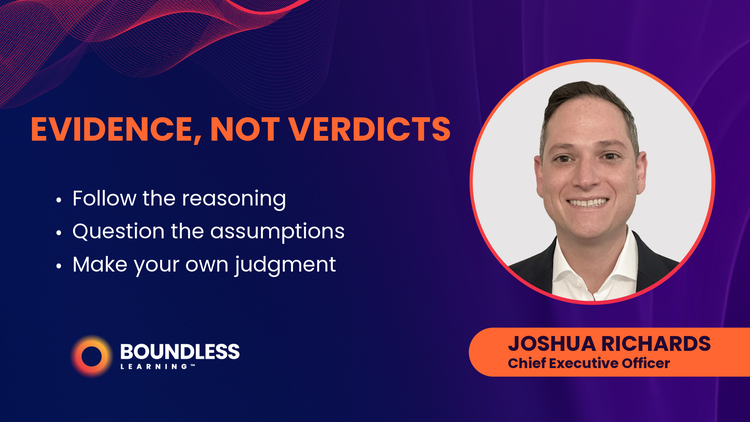
The part of Insights that matters most to me is probably the least flashy, which is that it shows its work. Leaders can see the data behind the scores, the weighting and the methodology. The AI Advisor works the same way. You can ask why two programs score differently and it can explain the answer, show the supporting data and even the query it ran. That makes the analysis more useful because leaders can understand how the answer was reached, question the assumptions and make their own judgment.
A dean, a CFO and a faculty committee may look at the same proposal and ask very different questions. They should all be able to follow the reasoning, understand what the data is telling them and see where it stops. They should not have to take somebody’s word for it, including ours.
That principle also shaped what we deliberately did not ask Insights to do. A score is not a probability of success or a recommendation, a high AI exposure score does not mean a program has to change, and the forecasts are there to inform a decision, not predict the future.
The scores are evidence, not verdicts. Insights can tell an institution a great deal about the market around a program, but it cannot decide whether that program fits the institution’s mission, whether the faculty want to build it or what it means for the students already being served. Those are institutional judgments. Our role is to help leaders get to a decision they can stand behind sooner, with the reasoning clear enough to bring a board, cabinet or faculty into the conversation.
For our existing partners, that gives us a much stronger starting point for conversations about where a portfolio should go next. For institutions that do not know us yet, it is also a pretty direct way to understand how we think. Bring us a question, look at the data with us and judge us on that.
Institutions will use Insights in different ways, from working largely on their own to engaging our strategy and advisory team or asking Boundless Learning to help turn a decision into action. We are comfortable with any of those because we do not think every institution needs the same model or every problem requires the same answer.
That same idea runs through the new Boundless Learning website. We wanted the site to give a much clearer picture of the company we are today and the different ways we can work with institutions. The line on the homepage I care about most is “Your goals. Your budget. Your terms.” To me, that means bringing an institution what it needs, whether that is better intelligence, help with execution or both. Insights is one of the clearest examples of that we have built so far.